
Melo Awarded Funding Through STFC's NHS Fit for the Future Missions R&D Accelerator in Partnership with NHS University Hospitals of Liverpool Group
We’re incredibly proud to share that our work with NHS University Hospitals of Liverpool Group (UHLG) has been awarded funding through the STFC NHS Fit for the Future Missions R&D Accelerator — part of the wider UKRI NHS Fit for the Future R&D Missions Dementia Programme, and the UK’s national drive to transform dementia diagnosis, care and outcomes through:
Improving early detection and ongoing understanding of dementia
Accelerating adoption of proven innovations across the NHS
Ensuring patients receive faster, more personalised care
Together with UHLG and partners, this project will enable us to expand real-world evaluation, strengthen the evidence base for behavioural-led care in dementia settings, and support wider NHS adoption.
Our work with NHS UHLG
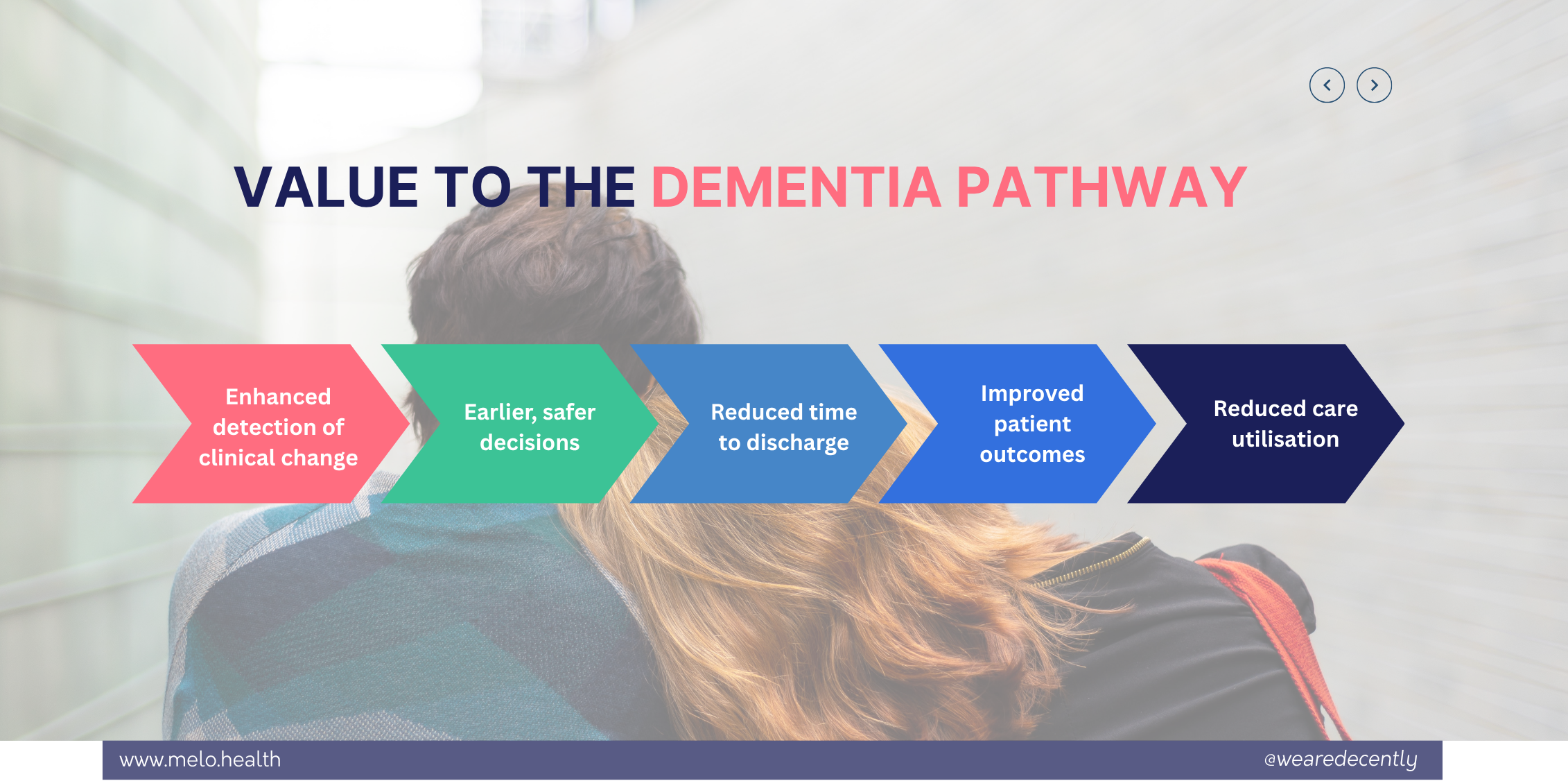
Over the past year, we’ve partnered closely with clinical teams across UHLG to embed Melo across 13 wards spanning Aintree, Royal Liverpool and Broadgreen hospitals, supporting teams to better understand and respond to patient behaviours.
By capturing real-time insights, Melo enables staff to:
Identify behavioural patterns and triggers
Deliver more personalised care
Support enhanced observations with clearer, more structured data
Support discharge planning through quicker and more confident decision-making
With 35,000+ assessments completed, 500+ active users, and 700+ patients discharged, this collaboration is already demonstrating how better behavioural insight can directly improve both decision-making and patient experience.
Introducing ABC+, a new lens on behaviour
Alongside this milestone, we’ve recently launched ABC+, our enhanced behavioural framework.
Traditional ABC (Antecedent, Behaviour, Consequence) frameworks are widely used in practice to capture complex behaviours. ABC+ builds on this foundation, inspired by approaches like Dementia Care Mapping (DCM), to broaden the focus beyond complex behaviour and provide a more holistic picture of the patient experience. It includes:
Positive behaviours — what’s going well and should be reinforced
Sleep insights — a critical but often overlooked driver of behaviour
Context-rich observations — enabling deeper, more meaningful analysis
This shift aligns closely with the principles of person-centred care, helping teams move beyond observation alone, towards understanding, insight and proactive care - while recognising that behaviour is often a form of communication.
This milestone reflects true collaboration, between clinicians, innovators and healthcare systems.
Thank you to everyone across UKRI/STFC and UHLG for making this possible. We’re looking forward to continuing our work and progressing with the project together.
