
Digitising behavioural insight to improve dementia care and discharge
How Melo is transforming behavioural assessment, multidisciplinary decision-making and patient flow on the journey from hospital to home.
- Organisation
- NHS University Hospitals of Liverpool Group
- Sites
- Aintree, Royal Liverpool and Broadgreen
- Using Melo since
- Early 2025
- Frameworks
- ABC, ABS and ABC+
assessments completed digitally
staff users across three hospitals
patients cared for using Melo
wards across three hospitals
Melo platform data.
Behaviour recorded on paper, without the detail decisions need
Patients with dementia and other cognitive impairments often present with complex behaviours, for many different reasons. Behavioural observations were traditionally recorded on paper forms, often completed inconsistently and without the structured detail needed for timely discharge planning or multidisciplinary decisions. For hospital teams, that led to five ongoing challenges.
- 01Fragmented behavioural data
- 02Behavioural risks and patterns hard to identify
- 03Inefficient handover between departments
- 04Delays in discharge planning and patient flow
- 05High administrative burden
Evolving behavioural assessment with ABC+
NHS University Hospitals of Liverpool Group has been part of NHS England's Enhanced Therapeutic Observations and Care (ETOC) programme. Through it, the trust recognised the need for a more holistic approach to complex behaviours. Working together, that led to ABC+, which replaces traditional paper ABC charts with a digital approach that captures more of the picture.
- 01Positive behaviours
Recognising moments of engagement, wellbeing and progress.
- 02Negative behaviours
Structured insight into behaviours of concern and the circumstances around them.
- 03Sleep
Another important dimension to understanding a patient's overall presentation.
ABC+ shows how Melo has developed alongside clinical teams, responding to real-world needs rather than simply digitising a paper process.
One shared view, from the ward to home
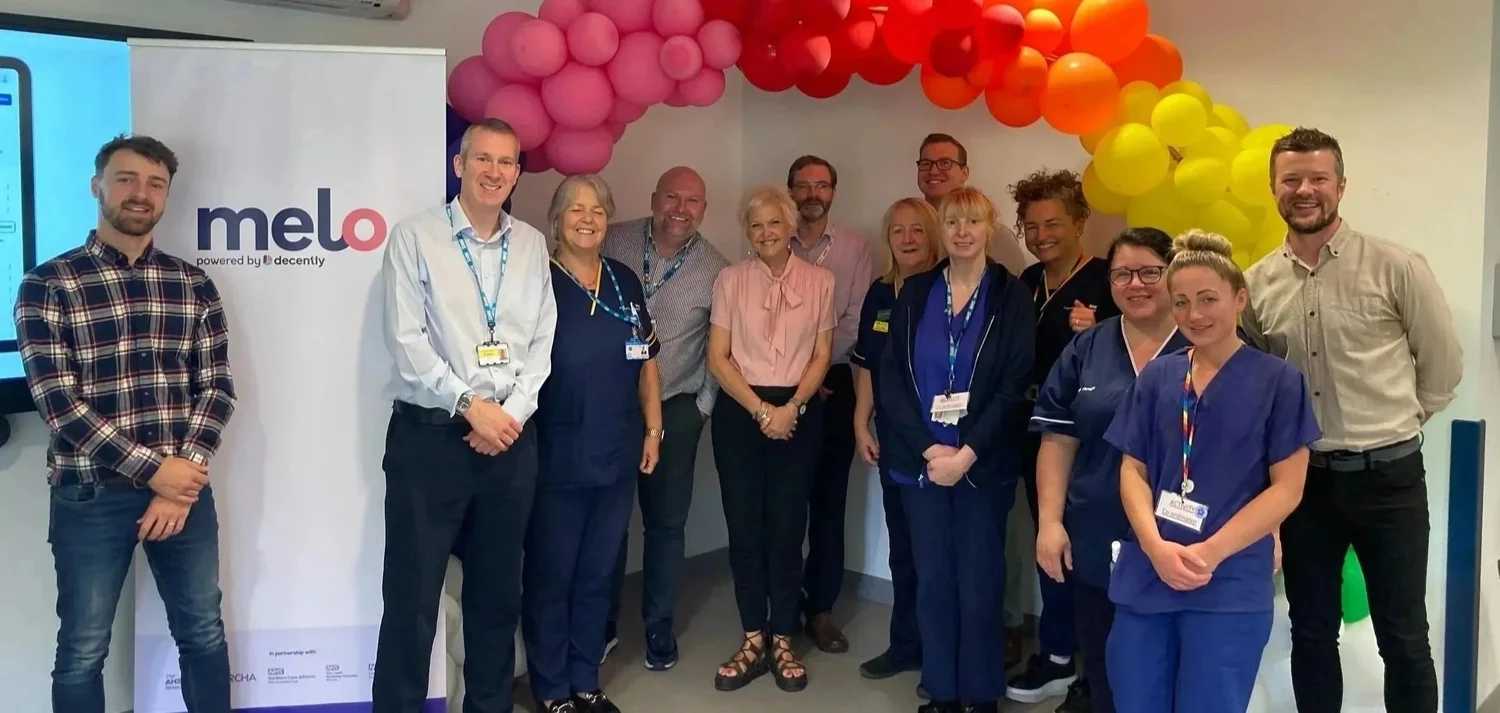
Since early 2025, clinical teams across NHS University Hospitals of Liverpool Group have used Melo as part of their Hospital to Home programme, which aims to improve care for patients living with dementia and complex behavioural needs.
Teams record behavioural observations in Melo, at first using a structured Antecedent, Behaviour, Consequence (ABC) framework or the Agitated Behaviour Scale (ABS), and now using ABC+ alongside the scale. They see results in real time, spot emerging patterns and bring them into MDT discussions and discharge planning with the Transfer of Care Hub (TOCH) and community bed brokerage teams.
See the pattern sooner on your own wards
Start a free trial and record behavioural observations with your own team.
What changed on the wards
Better quality behavioural insight
Real-time digital entries replace paper forms, improving the completeness and accuracy of assessments. Staff no longer chase fragmented notes or wait for psychology reports, which saves administrative time for direct patient care.
Earlier identification of trends and patterns
Teams spot behavioural patterns sooner, including time-of-day agitation, environmental triggers and responses to interventions. Earlier detection supports proactive care and clinical decision-making.
Improved communication across teams
A shared view of patient behaviour across nursing, care staff, therapy, psychology and discharge teams reduces duplication, builds a common language and helps staff act confidently on real-time information.
“We have had no rejected discharges on one of our General Medicine wards at Aintree since introducing Melo.”
Greater confidence in discharge decisions
Ward managers, patient flow coordinators and the Transfer of Care Hub now use Melo's insights to inform decisions about discharge suitability, making handover smoother and helping patients move into appropriate community settings.
Results at a glance
Staff survey, self-reported.
- Improved data quality and auditability
- Less time spent producing information for discharge planning
- Paper ABC forms removed from wards
- Better visibility of patient behaviour across teams
- Faster identification of behavioural patterns
- More support for discharge planning
From the people using Melo

“Seeing so many staff using Melo and hearing their positive feedback is fantastic. It's helping us understand our patients better and improve their experience in hospital.”
- “Melo is always at the forefront of my mind for supporting discharge planning. I can't imagine life without Melo now.”
- “Staff are happy with Melo and we have now removed all paper-based ABCs off the ward.”
- “The ability to export behaviour charts directly and share them with the MDT is a major advantage.”
- “I am finding Melo very helpful. It has really aided clinical decision-making.”
- “I love how we can capture positive behaviours in Melo and this is pivotal to a patient's care pathway.”
- “Ward staff are loving it, everyone's on board. They are even training each other, even bank and night staff.”
What these numbers are, and what they are not
- Platform figures come from Melo usage data.
- Survey figures are self-reported by staff.
- Patient stories describe individual cases and are anonymised.
- Melo supports clinical judgement. It does not diagnose, recommend treatment or make decisions.
- Case study
Royal Hospital for Neuro-disability, Putney
Read the case study - Case studies
All case studies, evaluations and research
See all case studies - Governance
DTAC, DCB0129, DSPT and how we handle data
Go to the governance hub
See how Melo works
Explore Melo and see how clearer behavioural data can strengthen the evidence behind clinical decisions.
Start free trial