
What happens to behavioural assessments once they’re completed?
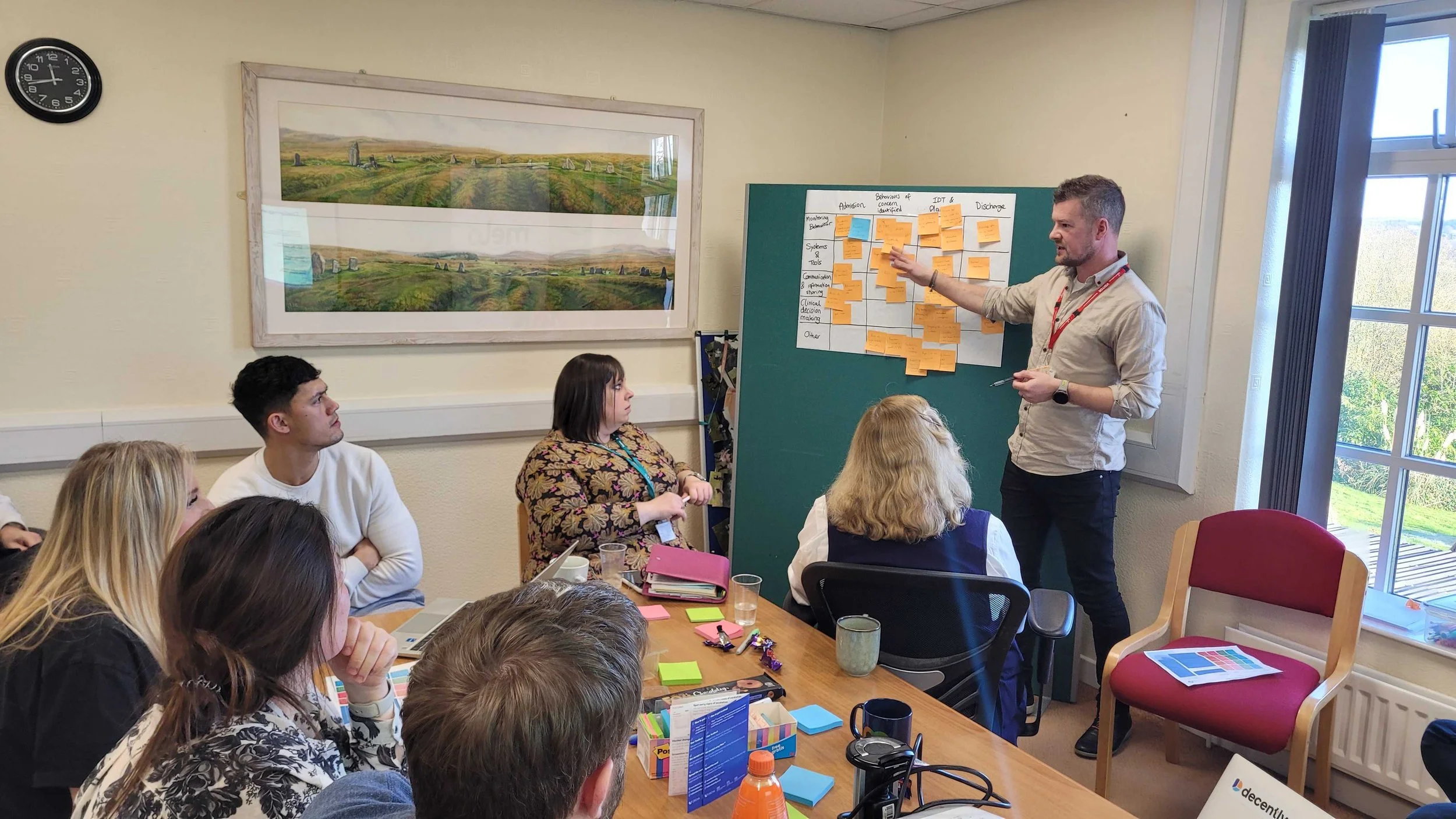
In specialist neurorehabilitation, recording behaviour is an essential part of care. But making sense of those records across shifts, staff and weeks can be surprisingly difficult.
On a neurorehabilitation ward, an episode of behaviour that challenges might be recorded in minutes. Understanding what that episode means alongside everything else the team has observed can take considerably longer.
By the time a clinical psychologist prepares for an MDT review, there may be dozens of assessments to examine. Each contains useful information, but the clinician still needs to establish how often particular behaviours have occurred, whether their severity has changed and what circumstances might be contributing to them.
In services relying on paper-based assessments, much of that work happens manually. Forms need to be checked, information compiled and charts prepared before the team can begin discussing what the records show.
It’s an important part of clinical practice, but it can also be enormously time-consuming.
Four questions worth asking about your service
Tap a question to see how Melo helps.
0 of 4 opened
Staff record assessments digitally at the point of care, and Melo brings the entries together in charts. Clinicians can review changes in frequency and severity without compiling each assessment by hand.
Read more in this articleThe whole care team works from the same record, so what one shift observes is there for the next, and for discussions across disciplines.
Read more in this articleMelo charts positive behaviours alongside incidents, so settled periods sit in the same picture as the difficult ones.
Read more in this articleNurses, support workers, psychologists and therapists look at one shared record. That makes it easier to see where observations agree, where questions remain and what deserves a closer look.
Read more in this articleOn this page
The work that follows an assessment
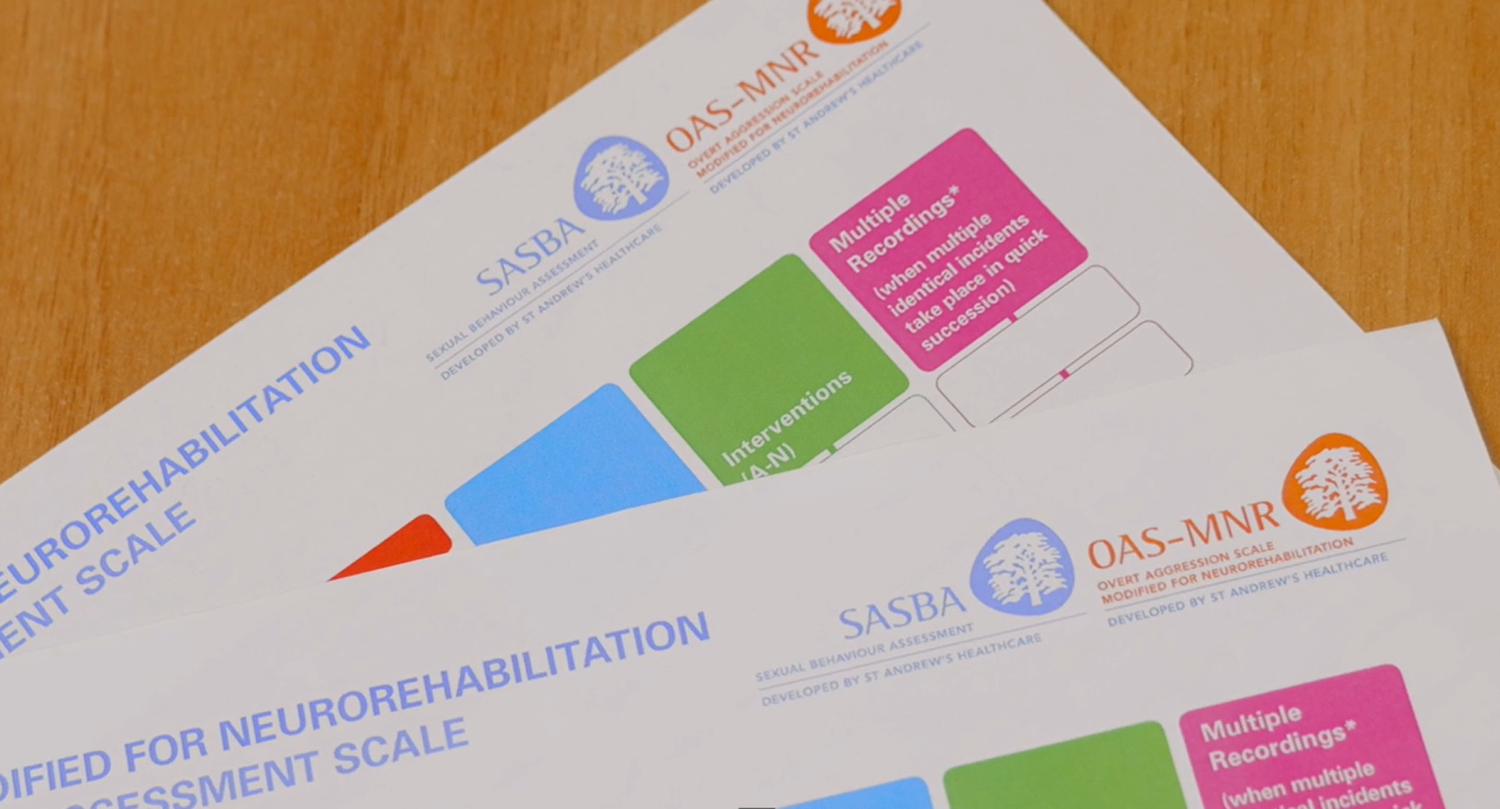
Specialist neurorehabilitation teams use established assessment tools to document behaviour consistently. The Overt Aggression Scale – Modified for Neurorehabilitation (OAS-MNR), for example, provides a structured approach to recording aggression after brain injury. Other tools, including the St Andrew’s Sexual Behaviour Assessment (SASBA), help clinicians assess different types of behaviour that challenges.
These assessments provide valuable information about a person’s presentation and needs. Their usefulness depends partly on what happens once staff have completed them.
Consider the questions a team might need to answer during a care review.
Has the frequency of physical aggression changed over the past month? Are incidents becoming less severe? Do particular behaviours occur more often during certain activities? Are there periods when the person appears consistently more settled?
Answering these questions means examining multiple records together.
Four review questions, one record
Pick a question to see how the same entries answer it.
When assessments are held on paper or across separate documents, staff may need to transfer information into spreadsheets, calculate totals and prepare graphs themselves. The process takes time, particularly when assessments are completed frequently or a service supports several people with complex behavioural needs.
It also creates a practical difficulty: the information available at a review may depend on how recently someone has had time to process it.
Why timely access matters
Behaviour after acquired brain injury can fluctuate. A person may experience periods of agitation or aggression alongside times when they are comfortable, engaged and responding well to support.
Individual records provide important detail about these events. Looking across several days or weeks helps clinicians consider whether they reflect a broader pattern.
Take an increase in recorded aggression. A clinician reviewing the data might want to examine when incidents occurred, how severe they were and what was happening beforehand.
They would also need to consider whether the apparent increase reflects a change in behaviour or simply more consistent recording.
That distinction is important. Behavioural data needs clinical context, and even a well-documented pattern does not establish its cause.
Having the records readily available allows clinicians to spend more of their time examining these questions and less time preparing the information needed to answer them.
Making established assessments easier to use
Digital recording offers a practical way to reduce the manual work associated with behavioural assessments.
For clinical teams, the important consideration is whether a system supports the assessments and working practices they already rely on.
Melo supports established tools, including the OAS-MNR and SASBA, alongside other structured behavioural observations. Staff record information digitally at the point of care, and the entries are brought together in charts that clinicians can review over time.
This makes it easier to examine changes in the frequency and severity of recorded behaviours without manually compiling each assessment.
The same information can also be accessed by other members of the care team, supporting discussions across shifts and disciplines.
For psychologists, this can reduce the preparation involved in reviewing behavioural records. For nursing and support staff, it means their observations are available to contribute to the wider clinical picture.
The underlying clinical work remains the same. Staff still need to observe carefully, complete assessments accurately and use their professional judgement when interpreting what the information shows.
See Melo with sample data
Record an assessment and see how it shows up in the charts.
A shared understanding across the team
Behavioural assessment is a collective effort.
Nurses and support workers often spend the most time observing and recording behaviour during everyday care. Psychologists, therapists and other clinicians bring different expertise to understanding those observations and considering appropriate support.
Filmed with the clinical team at Elysium’s Moorlands Neurological Centre, when they were using Melo. Professor Nick Alderman, who appears in the film, has since joined Melo as clinical lead.
Bringing that information together helps the MDT work with a more consistent record.
It also makes it easier to review aspects of someone’s experience that might otherwise receive less attention.
Periods of settled behaviour, positive interactions and participation in activities can be just as relevant to understanding someone’s progress as incidents of aggression or distress.
A record focused heavily on incidents may provide an incomplete impression of a person’s day. Reviewing behavioural patterns alongside other observations gives clinicians more context when discussing their needs.
This is particularly relevant in neurorehabilitation, where progress can be gradual and changes in behaviour are not always straightforward.
A shared record won’t resolve every uncertainty. It can, however, help clinicians identify where their observations agree, where questions remain and what deserves closer examination.
Getting more value from the information teams already collect
For services considering how to improve behavioural assessment, it is worth looking closely at the work involved after an observation has been recorded.
How much time goes into compiling assessments for clinical review? Can staff readily see changes across shifts? Are positive and settled periods documented alongside incidents? And how easily can the MDT examine the evidence together?
The answers can reveal opportunities to improve the process without changing the established clinical assessments themselves.
After all, the purpose of collecting behavioural information is to support an informed understanding of the person receiving care.
The easier that information is to access, examine and discuss, the more useful it becomes to the clinicians responsible for interpreting it.
Make assessments easier to review
See how structured assessments come together for the whole team.
Get new research when it is published
Occasional, and only when there is something to say. No product marketing.
Melo, in your own service.
Start a free trial on a demonstration ward and see what your own behavioural data looks like.
